Pages

25.11.16

APA 6th Referencing

For James' lesson we had someone from the library to come in a teach us about APA 6th Referencing to ensure that anything we use from another source is given its own credit. Other reasons for  referencing include;

  • Showing the research I have done
  • Supporting my point 
  • Enabling follow ups on my work
  • get originals 
  • good mark
  • avoiding plagiarism 

What is Plagiarism ?
Copying and Pasting other peoples work
Use other peoples work 
Not referencing properly 

There are two parts of APA 6th Referencing the 'in text citations' and the 'referencing list' both need ti correspond for the referencing to have been done correctly. 

'In Text Citations' are used for three things summarising , paraphrasing and quotations. The reasons for this is two directly 'quote' someones exact words or explaining someone else theory. The format for this is simple;

(Surname of the author, year of publication) 
(Kessler, 2003) 
(Holmes, 2016) etc. 

Small quotes which are less than 40 words are signified simply by using double quotation marks. Page number, surname of author and year of publication are need to be present for the referencing to be done correctly.

When the quote is more than 40 words instead of quotation marks a page indentation is used. But it is best to avoid long quotes unless absolutely necessary. 

When there is no date you simply use the letters n.d. to replace the year. (Surname of author, n.d.) 


Referencing Images

The format for referencing images is slightly different below is an example 

(Image number : Name of work (Artist's name, Publication date)
e.g.
Figure 1 : My Bed (Emin, 2006)


Referencing List 

When compiling a reference list everything that has been used in the document as sources needs to referenced. They are all compiled by authors names in alphabetical order.


22.11.16

Phase 2

A sense of place :

During the lesson with rob the second phase of the project was introduced. Drawing from the primary and secondary research I did within the first phase I need to create a proposal which will inform my direction for the rest of the project.

We were given a few suggested examples such as a campaign to raise awareness for an event or a proposal for a landmark of historical importance etc.

When handing in the project at the end of the year I will need to submit the following :

Concertina Sketchbook
Written Proposal
Finalised proposal material
Supporting materials

1.11.16

After effects Workshop

We spent the session creating the 10 second video which we all then uploaded onto Vimeo. We learnt how to make solid colour layers and music blend together to the beat of the song. I enjoy watching my final piece as the colours are pretty and go well with the tone of the music. We chose the different colours by using a colour swatch.


The rest of the lesson was spent prepping for the next class. We have been asked to choose a book and then create stills using photoshop.

30.10.16

Studio session

We began the studio practise session by creating six sketchbooks, recording a personal memory as text and as maps of different scales. Drawing the maps from above.

My memory was from the time I dropped a ball down my nan's spiral staircase almost falling down when going to collect.


In the afternoon session we had to work in collaborative groups to create a piece connecting all our memories together. We had a lot to do with holidays and destinations so decided to do it as if someone was travelling and then going home. We added roads, plans and train tickets to make the piece look even better below is a few sections of the piece.


Seminar - 3rd October

Convergence - The coming together of two entities/ a meeting point

'Convergence'  is the moment of translating when design & communication 'meet' 

Paul Rand - IBM Rebus (1981)

Rebus is a representation of phrases/words with pictures, symbols etc. this depicts a word instead of using standard typography.


We also looked into Marshall Macluhan book - The mediam is the message and its squeal 'The medium is massage' a book I currently reading.


We were asked to create a outcome using the magazines which had been passed around. After looking through the magazines we decided to explore the influence which the news and media has over society an out every day lives. As a group we folded paper and then cut it into a string of people holding hands. Each person then had a celebrities name, something we desire to be due to the media or a complete opposite.  The very first has the quote 'I was desperate to be everything they wanted me to be' This being an angry statement aimed at the media due to the social pressure they put on people. We shoyuld be true to ourselves instead of aiming to be perfect all the time.


29.10.16

john kellys workshop

29/9/16 -

For the brief we had to do physical drawing around huddersfield town centre. although faced issues this rain, security staff moving us and the wind I enjoyed the experience.


25.10.16

Species as Space

6th October 


Began the session by looking at different ways of collecting materials to inform our work.

We looked into an designer named Massimo Vignelli, he says that designers fight ugliness like doctors fight disease. Visual diseases is all around us and we try to cure it. In order to help him make decisions Vignelli uses a thumbnail process and morph sheets. A morph sheet is a central idea lots of ideas growing and morphing out of it VIgnelli did some work for American Airlines, he states that every other airline changes its brand image and comes and goes, but American airlines has not. Simply creating one word with their brand name in Helvetica and making it half in blue and half in red. Effective and clean no need to change because red and blue are as American as you get. 


Other means of creative making decisions could be made by storyboarding, maquettes and a drawing process et cetera. Drawing process is about thinking while drawing, collecting ideas which superimpose on one another.

Typology gathering and studying types, this concept underpins much of collecting it also implies a science like methodology. They are often photographic outcomes, Brent and Hilla Becher made photographic typologies as an archive of uniform photograph. The grid structure helps give symmetry, Each object is large and as important as any other. Consistency is key in the photographs of the gas containers, the light, scale and viewpoint all correspond. Their work was often displace in a grid of neutral white frames.


Idris Khan then went on to explore the Becher’s typologies further by superimposing all the images on top of one another. This created a ghost like effect due to the structural and pictorial consistency of their work.


Other artists who use typologies in their work include:

Karl Blossfeldt – photographer form an earlier period creating a typology of stems and plants


Juan Fontcuberta – examaning the effects of visual language in its ability to crate myths or strangeness.


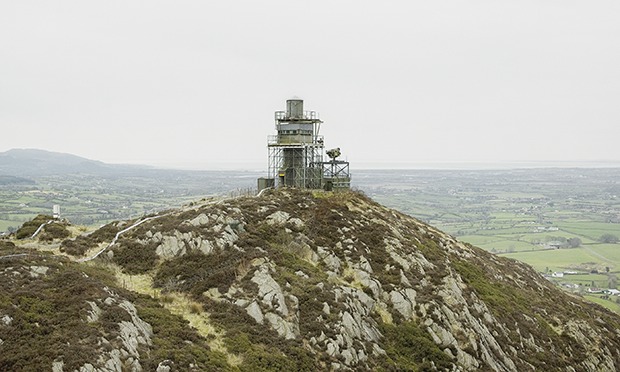
Donovan Wylie –typology of watch towers in the hills of notherhen Ireland.  All the images were taken from the same height as the watch tower using a helicopter.


Taxonomy – Taxonomies are scheme of classification, they help as describe a system which contains multiple types they are larger and more complex and typologies more research and observation is needed.

Eadweard Muybridge was an artist that studied movement made by animals; he considered humans to be animals. Muybridge was employed to prove that a horses left the ground when galloping he did this by photographing the animal. The two central images on the top row prove said theory. From then on he photographed humans doing a range of physical activities from sports to the mundane. The grid behind the subject enabled the taking of measurements there is a feel of the scientific process about both measurement and object description.